
People seem to forget that the story of Christmas starts with a census. Augustus Caesar, the Emperor of Rome, was an ambitious one and wanted to get a count of the population of the entire world. Granted, his idea of the entire world wasn’t exactly what we think of today. He probably didn’t know about North or South Americas or Africa, or even most parts of Asia. But he most likely had a sweet palace on top of a tall hill. And when he stood at the precipice, like all rulers drunk with power, he shouted, “Who lives here and what is their ethnicity?”
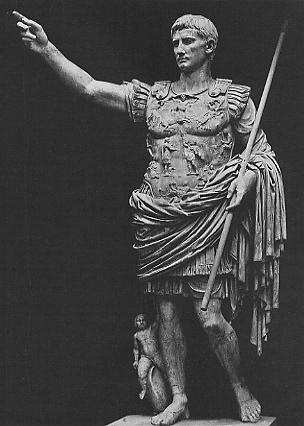
“And also, why is this little baby always hanging around? Do I count him as half a person?”
Since Caesar gots to get paid, he sent out a decree to the far ends of the land (or however far decrees can reach) and Mary and Joseph had to go to Joseph’s hometown to register. So for those of you who complain about filling out a census, according to GoogleMaps, Nazareth to Bethlehem is about 170km (about 105 miles). Now, unfortunately, GoogleMaps does not have “By Donkey” directions, but I’m assuming it took a few days. So a few days walking in the desert with a pregnant woman who keeps insisting she’s a “virgin” but will still ride on the donkey. I don’t know if you’ve ever been on a road trip with a pregnant woman, but I can guess it’s on no one’s bucket list.
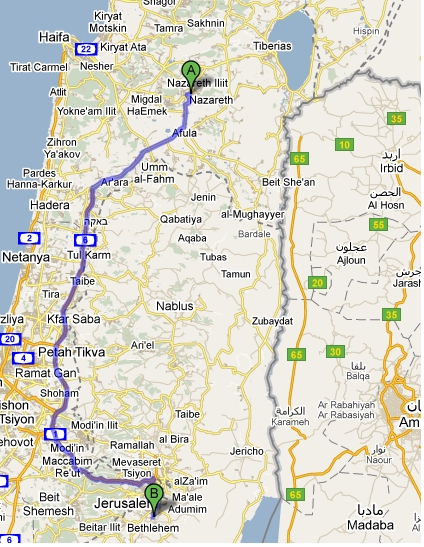 Yeah…it’s pretty darn far, even with modern infrastructure.
So was Jesus included in the census? Probably not. Joseph and Mary were stuck in a barn with him for the next two years. They most likely missed the census taker, because “under a bright star” isn’t exactly a registered address. They were also busy deciding if “Son of God” is an ethnicity or a moniker.
Fast forward a few centuries to a bunch of white men sitting around discussing what “America” is and how they could make it even more awesome. They already took the idea of a constitutional republic and rammed it down the citizens throats with sweet sayings like:
“A government of laws, and not of men.”
“Each person has the right to pursue and fulfill his or her unobtrusive vision of the good life.”
“Protect the minority from the tyranny of the majority.”
Although they sound like Green Day or Kanye lyrics to us Millenials, to the scurvy and gout-ridden colonists, these were pretty good rally cries. So after the partying simmered down, the Founding Fathers realized that someone is going to have to pay for these sweet new freedoms. And since we haven’t started our own imperialistic tendencies, we would have to tax our own people. But that whole “taxation without representation” argument was still fresh, so it was time to kill two birds with one constitutional amendment. Especially since census in Latin means “tax.” Zing!
In 1787, the United States became the first country to mandate the counting of its citizens. Again, fairly ambitious, but the Founding Fathers figured the best way to keep something going was to put it in the Constitution. In order to decide how many seats a state was going to have in Congress, the law would enact a certain number of folks would be represented by one Congressman (Congresswomen weren’t even in their vision–they were too busy sewing flags). The law would also dictate how much money would be doled out to these citizens.
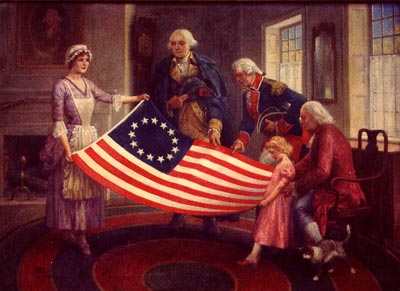 “Yeah, it’s pretty good. But who is this cat? Does he want to be counted in the census, too?”
Article One, Section Two of the Constitution says that “Representatives and direct taxes shall be apportioned among the several states…according to their respective numbers…” It then goes on with some details about what “numbers” are and what a “person of the United States” is and something about when creepy census workers will come to your house and harass you.
It took a couple years (1939 for Connecticut because they’re name loosely translated means “stubborn bastards”) until 1790. The members of Congress (possibly drunk, possibly syphilis ridden, DEFINITELY white) pawned off the responsibility of visiting every house and every establishment and filling out the paperwork to the federal marshals. It took 18 months. But finally, but the tally was finally in on March of the year 1792. The results were given to President Washington.
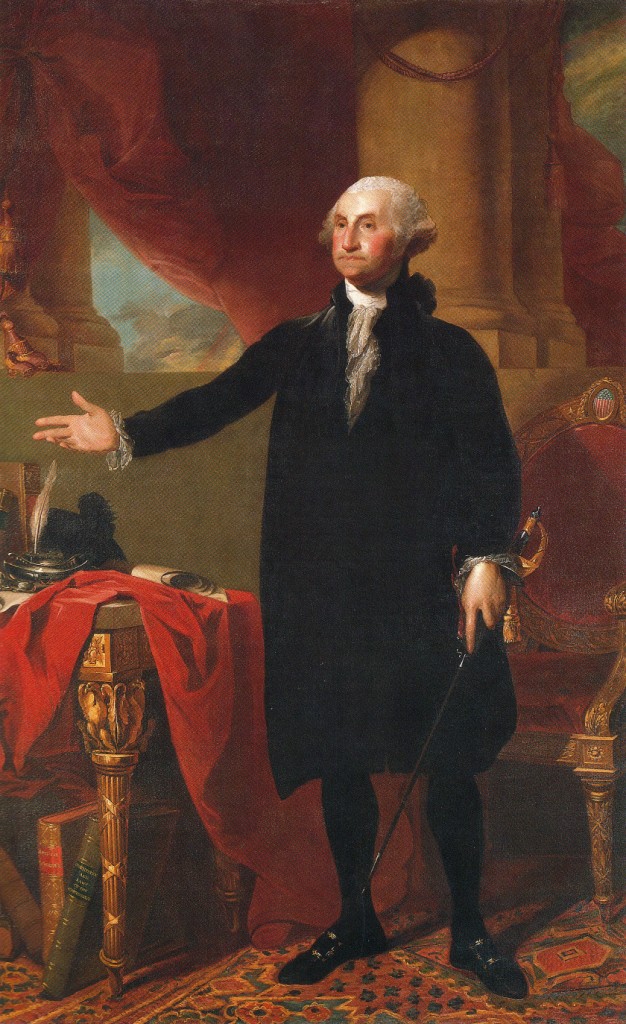 “Uhh thanks for these numbers, but what is ‘hot blonde who lives above a barn in Schenectady, NY’? What is a ‘hot blonde’? A filly?”
Back then, there was only six questions. All they wanted to know was the head of the household and how many free white men also lived in the household. The numbers were slightly skewed, obviously. It also asked “colors,” which is an old school way of saying “race.” Unfortunately, the answers are so unpolitically correct, I don’t even want to mention them. I’ve never even heard of the term “like a tobacco plant with a splash of indigo and buttermilk.”
After a couple years (in 1810, exactly), the members of Congress got off their drunk asses and realized that counting folks is nice, they need to know about Americans. Since this was almost 196 years before Facebook, the only logical step was to just ask more questions. And not just of people, but of businesses, too. And since it was easier to ask businesses what they actually did (What the hell is a milliner? You make hats? Is that really necessary to have a trade school devoted to this?)
 “Head of household? One? And twelve cats? Shocking….”
After that, the questions and procedures stayed the same for about 140 years, which was pretty awkward after the Civil War and the freed slaves still had to say they were freed, but NOT white members of a household. Then in 1950, there was this little thing called a “computer” invented. Congress put down the scotch and had a looksie and decided it was pretty sweet and needed to be exploited. The computer was able to calculate the census much faster than 82 year old Gladys in Arkansas. So, in the spirit of American inginuity, 20 thousand folks lost their jobs and politicians were able to use the information to reap funds from the government.
Then in 1960, the United States Postal Service got involved (what took you so long?!) and agreed to mail out the census forms instead of sending out strangers to parts of Mississippi that haven’t seen a person since the last time a census worker came to their house. Since then, the government says “Here’s a piece of paper with questions. Answer them with the same fervor you fill out those sweepstakes forms on the back of cereal boxes.” Pretty good system. Until, as usual, crazy people with a soapbox get a hold of it. Which brings us to 2010.
 “If the government says, ‘Just Do It,’ I will personally eat my Nikes before obeying their archaic rules. I hate libraries. And fires that are extinguished, no questions asked.”
It actually got so bad that the US Census board had to a create a “Common Census Myths” section of their website. Now for most people over the age of 15, the census shouldn’t come as a shock, but for some reason people in America have short-term memory loss and need a reminder of why we need to know how many people live in your city. The best part about the 2010 census is that it is the shortest and most simple in history. Despite 225 years of college, medicine, and basic human connection, Americans are still not advanced enough to go beyond simple questions like their “name,” “age,” and who “sleeps in the bed down the hall.”
So the next time some crazy person wants to know why you are “contributing the socialist state” and acting like one of “Obama’s secret police,” just remind them: Hey…at least you aren’t a woman in the 1790s. Stand up and be counted or sit down and lose federally funded money for those parks where you like to hold up your misspelled signs.
 Lower It Up
Pingback: Day 24, 2020 – Population 436 – Lower It Up