Baking A Soul Cake (no Tasty video involved)

I’m not waiting until 2017 to start anew. Dates are arbitrary, but the sun is not. Yesterday was the Winter Solstice; the shortest day of the year. From here on out, it’s only going to get brighter. So instead of the traditional New Years Resolutions, I’m starting today. And they won’t be called “resolutions” because the very word is redundant. The solution didn’t work the first time, so you are trying it again? That is the very act of insanity – trying the same thing over and over again and you don’t understand why nothing changes.

I will call these “new-solutions” for a new season. The holidays get people in a mood for both nostalgia and change. Which is a very weird place to be. An exhausting place to be. People stress about keeping traditions alive, when the only tradition that seems to stay in place year after year is the act of being stressed. Then people put pressure on themselves to act as hedonistic as possible, because they believe some magic clock with allow them to be better after the holiday season is over. If a personal trainer, a college admissions rep, and Oprah showed up on your porch on New Years Day morning, you wouldn’t be ready to jump into changing your life. You’d probably call the cops.

Image result for mormons
“Do you have a moment to talk about Jesus and his devotion to Whole 30?”

This time, I’m taking my cues from the sun. It wasn’t showing up lately, but it is slowly coming around again. So slowly, I will come around. And I will become brighter and warmer because of it.

Cultivate a healthy outlook on life. It is NOT easy to do, and the results aren’t immediate. Today we know SO much about the world that we are starting to become numb to the outrage, the sadness, and the disgust. We see more atrocities today than anyone in history ever has, because we have the ability to see them all at once. In one screen shot of a Twitter feed you can see a dead child refugee from Syria, a crippled town in Canada due to wildfires, and women lying bleeding in the streets of Manila. In a 30 second scroll on CNN, you can read about anti-LGBTQ legislation, a terrorist attack in Europe, and a new heroin epidemic that has now reached our nation’s elderly.

How is one person supposed to process this? If news editors can do it, why can’t I? If photojournalists on the street of Aleppo can keep going, why can’t I process these images? But then I need to remind myself, it’s the same reason I can’t perform surgery or fly a plane. It isn’t my job. Sure, it’s my duty as a human being to feel empathy, but it is not my obligation to read every article and know about every injustice in the world. I need to focus on having optimism in the face of adversity.

For the new season, I vow to look at both sides of a problem. And not just the left-side and the right-side, the conservative and the liberal, the male gaze and the female gaze. I mean look at the path that leads up to the story, and the path leading away from it. Terrorism and wars aren’t zits that just pop up overnight. They are festering cancer cells that have been slowly eating away at the strong, healthy cells for a long time, but goes unnoticed until the pain reaches the surface.

Those are big problems, but the perception can be applied to an even smaller scale. For example, I don’t know why I scaled back reading books this year. Was there too much on TV? Was I preoccupied with wedding planning? Was I exhausted from reading all those news articles?

Image result for tvs at airports
Hmm…This Netflix show is a little out there, but I’m going to give it a chance.

I could answer questions or I could start the path away from this disappointment in myself. I could pick up a book and read it. I could even start writing a book. Or write a blog post. Hey look at that, already on the path! And soon it will be paved and named Lower It Up Road and will have 13 Starbucks on it.

Love my relationships. I think a real marker of adulthood is when you realize you would rather have a few close friendships than hundreds of friends. There has to be an evolutionary reason behind this. When you are younger, you are constantly changing and trying out other people around you who are constantly changing. However, when you get older and start to build your “village,” you want people you know to the core. You want to believe that this person won’t throw you to a lion so they can escape. You want a person you can trust with your child, and not worry that they will eat them or trade to a neighboring tribe for beads or wine. You want a person who will nurture you when you are sick, and not leave you in a leper colony. Or trade for more wine.

Image result for baby african village
That baby is nervous because he knows the next town just got a shipment of Beaujolais nouveau.

For the new season, I vow to appreciate and love my relationships. Each one is so unique and needs special attention. And obviously I’m making fun of people for calling millennials “special snowflakes.” If you treated every relationship in your life as the same, you would be considered a textbook sociopath. Or a cult leader. Just like growing a garden, each flower and vegetable needs something different. Some need to be showered with more affection, and some a perfectly content to be left alone until they start to be eaten by a deer. Some need a to stay in one place to put down roots, and others could thrive being re-potted over and over again. Some people hate gardening and want to talk about something else. And some people hate analogies and just want you to be real with them. And bring over wine.

Be patient with myself. Impatience is a useless emotion. And it just makes you look like a dick. It’s often shown outside with sighing, glaring, and muttering under one’s breath. When you are a kid, impatience usually involves not being able to sit still and asking incessant questions. When a little kid is impatient, they are trying to process why they can’t have what they want. So we teach kids to be patient for events, like Christmas or birthdays or Sesame Street episodes. However, somewhere along the way, kids learn to be impatient with people. If someone isn’t moving fast enough or grasping new information quick enough, we change from impatient to frustrated. But what happens when we become impatient with ourselves? We can’t understand something and immediately assume we are stupid. We are late for work and blame it on ourselves for being lazy and not waking up in time. It’s exhausting.

Image result for kid on santas lap
“Moooommm! He wasn’t listening to me fast enough!”

For the new season, I vow to be patient with myself and then work on being patient with others. It will be a lot easier to have empathy for others if I can forgive myself for being human first. I will give people the benefit of the doubt before immediately cursing them to the seventh circle of hell (or wherever people go who don’t use their blinker). I don’t deserve a second chance, if I’m not willing to give others a second chance (or third or fourth). I will remember that I was not put on earth to complain. I was put on earth to breathe and experience everything else in between those breaths. And some of those experiences are going to be shitty and gut-wrenching. But then I will get to the other side of those and find the good. I will remember that focusing on myself first is not selfish. I will put my oxygen mask on first, I will inhale and exhale, and then I will help others.


Census Sensibility

People seem to forget that the story of Christmas starts with a census. Augustus Caesar, the Emperor of Rome, was an ambitious one and wanted to get a count of the population of the entire world. Granted, his idea of the entire world wasn’t exactly what we think of today. He probably didn’t know about North or South Americas or Africa, or even most parts of Asia. But he most likely had a sweet palace on top of a tall hill. And when he stood at the precipice, like all rulers drunk with power, he shouted, “Who lives here and what is their ethnicity?”

“And also, why is this little baby always hanging around? Do I count him as half a person?”


Since Caesar gots to get paid, he sent out a decree to the far ends of the land (or however far decrees can reach) and Mary and Joseph had to go to Joseph’s hometown to register. So for those of you who complain about filling out a census, according to GoogleMaps, Nazareth to Bethlehem is about 170km (about 105 miles). Now, unfortunately, GoogleMaps does not have “By Donkey” directions, but I’m assuming it took a few days. So a few days walking in the desert with a pregnant woman who keeps insisting she’s a “virgin” but will still ride on the donkey. I don’t know if you’ve ever been on a road trip with a pregnant woman, but I can guess it’s on no one’s bucket list.

Yeah…it’s pretty darn far, even with modern infrastructure.


So was Jesus included in the census? Probably not. Joseph and Mary were stuck in a barn with him for the next two years. They most likely missed the census taker, because “under a bright star” isn’t exactly a registered address. They were also busy deciding if “Son of God” is an ethnicity or a moniker.

Fast forward a few centuries to a bunch of white men sitting around discussing what “America” is and how they could make it even more awesome. They already took the idea of a constitutional republic and rammed it down the citizens throats with sweet sayings like:

“A government of laws, and not of men.”

“Each person has the right to pursue and fulfill his or her unobtrusive vision of the good life.”

“Protect the minority from the tyranny of the majority.”

Although they sound like Green Day or Kanye lyrics to us Millenials, to the scurvy and gout-ridden colonists, these were pretty good rally cries. So after the partying simmered down, the Founding Fathers realized that someone is going to have to pay for these sweet new freedoms. And since we haven’t started our own imperialistic tendencies, we would have to tax our own people. But that whole “taxation without representation” argument was still fresh, so it was time to kill two birds with one constitutional amendment. Especially since census in Latin means “tax.” Zing!

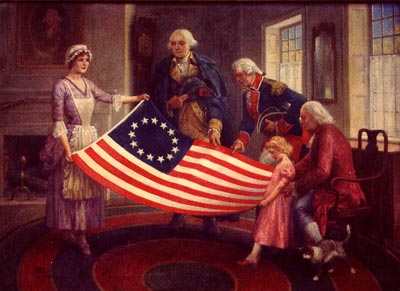
In 1787, the United States became the first country to mandate the counting of its citizens. Again, fairly ambitious, but the Founding Fathers figured the best way to keep something going was to put it in the Constitution. In order to decide how many seats a state was going to have in Congress, the law would enact a certain number of folks would be represented by one Congressman (Congresswomen weren’t even in their vision–they were too busy sewing flags). The law would also dictate how much money would be doled out to these citizens.

“Yeah, it’s pretty good. But who is this cat? Does he want to be counted in the census, too?”

Article One, Section Two of the Constitution says that “Representatives and direct taxes shall be apportioned among the several states…according to their respective numbers…” It then goes on with some details about what “numbers” are and what a “person of the United States” is and something about when creepy census workers will come to your house and harass you.

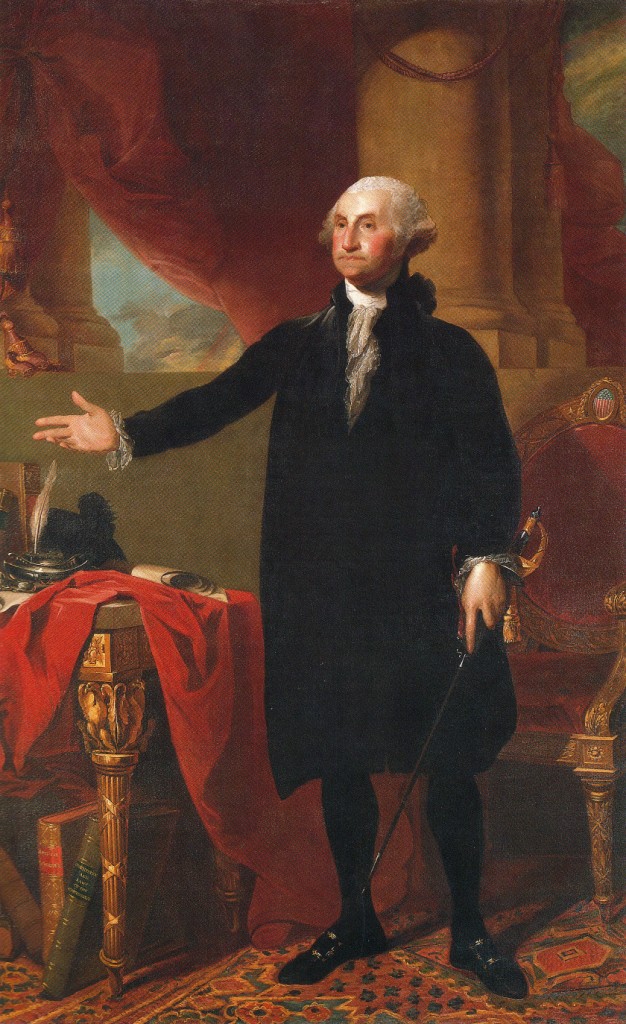
It took a couple years (1939 for Connecticut because they’re name loosely translated means “stubborn bastards”) until 1790. The members of Congress (possibly drunk, possibly syphilis ridden, DEFINITELY white) pawned off the responsibility of visiting every house and every establishment and filling out the paperwork to the federal marshals. It took 18 months. But finally, but the tally was finally in on March of the year 1792. The results were given to President Washington.

“Uhh thanks for these numbers, but what is ‘hot blonde who lives above a barn in Schenectady, NY’? What is a ‘hot blonde’? A filly?”

Back then, there was only six questions. All they wanted to know was the head of the household and how many free white men also lived in the household. The numbers were slightly skewed, obviously. It also asked “colors,” which is an old school way of saying “race.” Unfortunately, the answers are so unpolitically correct, I don’t even want to mention them. I’ve never even heard of the term “like a tobacco plant with a splash of indigo and buttermilk.”

After a  couple years (in 1810, exactly), the members of Congress got off their drunk asses and realized that counting folks is nice, they need to know about Americans. Since this was almost 196 years before Facebook, the only logical step was to just ask more questions. And not just of people, but of businesses, too. And since it was easier to ask businesses what they actually did (What the hell is a milliner? You make hats? Is that really necessary to have a trade school devoted to this?)

“Head of household? One? And twelve cats? Shocking….”

After that, the questions and procedures stayed the same for about 140 years, which was pretty awkward after the Civil War and the freed slaves still had to say they were freed, but NOT white members of a household. Then in 1950, there was this little thing called a “computer” invented. Congress put down the scotch and had a looksie and decided it was pretty sweet and needed to be exploited. The computer was able to calculate the census much faster than 82 year old Gladys in Arkansas. So, in the spirit of American inginuity, 20 thousand folks lost their jobs and politicians were able to use the information to reap funds from the government.

Then in 1960, the United States Postal Service got involved (what took you so long?!) and agreed to mail out the census forms instead of sending out strangers to parts of Mississippi that haven’t seen a person since the last time a census worker came to their house. Since then, the government says “Here’s a piece of paper with questions. Answer them with the same fervor you fill out those sweepstakes forms on the back of cereal boxes.” Pretty good system. Until, as usual, crazy people with a soapbox get a hold of it. Which brings us to 2010.

“If the government says, ‘Just Do It,’ I will personally eat my Nikes before obeying their archaic rules. I hate libraries. And fires that are extinguished, no questions asked.”

It actually got so bad that the US Census board had to a create a “Common Census Myths” section of their website. Now for most people over the age of 15, the census shouldn’t come as a shock, but for some reason people in America have short-term memory loss and need a reminder of why we need to know how many people live in your city. The best part about the 2010 census is that it is the shortest and most simple in history. Despite 225 years of college, medicine, and basic human connection, Americans are still not advanced enough to go beyond simple questions like their “name,” “age,” and who “sleeps in the bed down the hall.”

So the next time some crazy person wants to know why you are “contributing the socialist state” and acting like one of “Obama’s secret police,” just remind them: Hey…at least you aren’t a woman in the 1790s. Stand up and be counted or sit down and lose federally funded money for those parks where you like to hold up your misspelled signs.


When Irish Eyes Are Glazed Over…

St. Patrick’s day is one of the better national holidays we have in America. There’s nothing political attached to it, like Arbor Day and their tree-hugging liberals. It wasn’t based on a lie that’s been perpetuated for hundreds of years – ahem, Columbus Day. There’s no possible connection to mattresses or cars, like somehow Memorial and Veterans Days seem to be. You don’t feel bad if you’re alone (thank you, John Mayer’s “St. Patrick’s Day”). And best of all, you don’t actually need to LIKE the people you are around, because eventually you will be so drunk you won’t care if they’re obnoxious. The only downfall I see on St. Patrick’s Day is the government’s complete lack of sensitivity. If I want to wake up early and drink, I want it to be a bank holiday too, so that my financial decisions don’t hit my checking account for at least two business days. Despite my patriotic involvement in many a petition and fight to make St. Patrick’s Day a holiday we can take off from work without being judged, I will continue to use my vacation days to celebrate this day (and the day after so that I can recover, and find my soul and possibly lost cell phone).

St. Patrick’s Day is based on lowly Christian who drove the snakes out of Ireland in order to make room for Catholics, beer, poverty, and potatoes. I don’t know where this story came from, but there must have been a hell of a lot of snakes in Ireland that we somehow felt the need to send them to Norway and Africa.

Obviously, this story isn’t the whole truth. But if we didn’t listen to half truths for most of our childhood, then nothing would get done because kids would keep asking questions. Damn kids and their questions, always wanting to know “what was the Spanish Inquisition,” and “why do we have to take off our shoes at airports,” and “why do I need to learn the Pythagorean Theorem.” You just do, kid! Not shut up and let me celebrate what this lovely saint of a man did to make mommy and daddy drink until they puke green beer.”

Some things about Valentine’s Day that Hallmark doesn’t want you to know….

The story of St. Valentine is one that is shrouded in mystery and legends. The most popular legend says the Valentine was a priest who served during the third century in Rome. Emperor Claudius II decided that single men were better soldiers than those with wives and families. Claudius obviously missed that day in health class about reproduction and its necessity to perpetuate a society. Nevertheless, his decree went out to outlaw marriage for young men in his infantries. The first “Don’t Ask, Don’t Tell” military policy.

Being a priest, and therefore making his living off performing sacraments, this cut down Valentine’s work schedule to performing blessings on dead corpses and dipping crying babies (and adults) in Holy Water. He started to perform marriages in secret for young lovers. It was inevitable, though, that his secret would get out. Have you ever met a bride who doesn’t want to brag to her whole village about getting hitched? Claudius discovered what Valentine was up to and ordered him to be put to death.

Christians love a good martyred saint. Especially a priest who loves love. But Christians sometimes have trouble getting their stories straight. Another legend paints Valentine as a liberator of imprisoned Christians in Rome who were mistreated and often tortured. Although, it’s safe to say that no matter whom your personal savior was in third century Rome, you were pretty much treated like crap in Roman prisons. Either way, Valentine was caught and then, of course, killed.

But that’s a boring story. There’s no love. No intrigue. No mystery. No plausible plotline for a Hollywood movie starring Russell Crowe. So here’s where another legend creeps into the story-tellers repertoire. Firstly, Valentine was imprisoned for one reason or another. This part is always vague because it doesn’t matter what he did to get to prison. He could have been tossing puppies into fires or inventing hairstyles for the rich and obscure. Roman law was pretty basic. “I don’t like what you are doing. Go sit in this cold cell with your friends while I go back to building my awesome empire. And don’t conspire. We hate conspirers.”

So after he gets imprisoned, Valentine starts to get a visitor. A young girl who was probably the jailor’s daughter. Nothing says “forbidden” like a teenager in love with a criminal. Her dad was probably pissed, too. Those would have been some AWKWARD holiday get-togethers. Since Valentine was about to die anyway, he started to send the girl letters, which he signed “From your Valentine.” This is where the collective “Awwww…” comes in. “So THAT’S where we get the expression.” Never mind the 1800 years, a biblical language, and distance that separates us from that phrase – romance is everlasting and ethereal, gosh darn it! No matter the story, Valentine is often portrayed as sympathetic, heroic, romantic figure.

So if we know so little of St. Valentine, why do we celebrate his feast day in the middle of February? There are a few theories behind this. Firstly, feast days usually commemorate the birth, death, or significant event in the saint’s life (or after life, if you believe in those “miracles”). The early Church leaders were pretty random and arbitrary when it came to dates. At least that’s what they claimed. Instead, they would often look for pagan celebrations in attempt to capitalize on the rituals and lure in lost souls looking to be saved. You like your parties with the harvesting and the feasting? Well, we have better parties with magic tricks and cake. Come join us. Pretty effective PR move. Worked for Christmas, Easter, Mary’s Birthday, and All Saints Day. Why not for an archetype of love? In ancient Rome, February was the official beginning of spring and considered a time for purification. The pagan Lupercalia festival celebrates the fertility god of agriculture as well as Roman founders, Romulus and Remus, on February 15. The Christian leaders moved St. Valentine’s feast day back one day to February 14, probably hoping the celebrants would be too hung-over the next day to get up and do anything, including dancing and sacrificing animals.

But it wasn’t enough for the Christians to steal the day; they also wanted to steal some the rituals as well. During the Lupercalia festival, the elders would sacrifice a goat, cut its flesh into strips, dip it in blood, and hand it out to all the bachelors in town. The men would go around and start slapping women with the blood soaked pieces of meat. The girls went wild, because this meant to increase their fertility over the next year. And girls in first millennium Rome love nothing better than popping out babies! Hence, Beyonce’s less popular lyrics, “If you like it, then you should have put some blood on it.”

Later in the day, after being smothered with rotting carcasses, the young women from the city would place their names in a big urn and the city’s bachelors would choose the name and become paired for a year. Talk about leaving your odds to fate. Your pick could be sickly, ugly, poor, uneducated, or even worse, your cousin. But according to legends, these matches often ended in marriage. However, after the Christians got a hold of this, in 498AD, Pope Gelasius decided the Roman “lottery” system for romantic pairing was un-Christian and therefore outlawed. Love: 1. Randomness: 0.

So how did we go from chasing around girls with pieces of flesh to giving overly impersonal mass produced cards with glitter? It took a couple hundred years to get to that point. Although there are handmade valentines that have been recovered from the 1400s, it wasn’t until the middle of the eighteenth century in Great Britain where the exchange of cards and trinkets became popular among members of all classes (apparently poor folks like love just as much as the rich). Advancements in printing and cheaper postage increased the sales of valentines exponentially over the next few centuries. According to the Greeting Card Association—yes, this really exists—an estimated one billion valentine cards are sent each year. That’s a lot of glitter. To no one’s shock, 85% of valentines are purchased by women. And .005% are purchased by cats.

By the 21st Century, Valentine’s Day has become an accepted and celebrated holiday throughout most of America. Despite its Christian’s beginnings and extremely intimate sentiments, the secular “Happy Valentine’s Day” can be uttered platonically throughout the country without fear of being smacked or hearing the response, “You offend me.” Although some people say the latter no matter what. Don’t take it too personally. So why are certain items more prevalent than others on Valentine’s Day? Because of advertising. Not surprisingly.

Jewelry – “A Diamond is Forever” was coined by a young female copywriter in 1947 and is considered the most successful advertising slogan of the 20th century. Before diamond engagement rings, proposals often included offerings of cattle, land, and other gemstones in exchange for a family’s daughter. Ahh, the good ol’ days. De Beers had a bunch a diamonds they couldn’t sell and decided to convince generations of women that diamonds don’t break, disintegrate, or lose value (they do) just like love. Obviously it worked. Since diamonds and other jewelry have become synonymous with romance, it was only natural that advertisers upped their ante around the most romantic day of the year.

Chocolate – Chocolate makers in the 1800s realized no one was buying their confections between Christmas and Easter, which did not look good for their first quarterly profit. Richard Cadbury is credited with creating the first heart shaped Valentine’s Day chocolate box in 1861. Chocolate has also been proven good for one’s health in moderate amounts. Chocolate contains organic substances known as alkaloids. The most important of these substances is theobromine, which works as a stimulant to the kidneys. Another important substance found in chocolate is phenylethylamine, which is part of a group of chemicals known as endorphins. Endorphins have an effect similar to amphetamines and are found naturally in the human body. When endorphins are released into the bloodstream, the mood is lifted and feelings of positive energy are reached. Dark chocolate is shown to be a cancer killing agent while a newer study suggests that eating moderate amounts of chocolate once a week can lower your stroke risk as well as the risk of dying from a stroke. Although “Happy Valentine’s Day, hope you don’t have a stroke” doesn’t have a romantic appeal, one can assume that if you’re giving chocolate, the receiver will be happy no matter what.

Conversation Hearts – Sweethearts, as the candy is known, are made by the Necco Company since the 1860s when the founder designed a machine that could print sayings on the candy like a stamp. Originally, the candies were used only as wedding favors, but in 1902 they became mass produced when the company figured out a way to mold the candy into hearts, hence the name “Sweethearts.” Presently, Necco produces the hearts from late February though mid January of the following year. Approximately 100,000 pounds of hearts are made per day, which sells out in about six weeks. That’s a lot of “Be Mines”. Stalkers across the world rejoice.

Flowers – The history of sending flowers on Valentine’s Day is said to come from the 17th century. A daughter of Henry IV of France gave a party in honor of St Valentine. Each lady received a beautiful bouquet of flowers from the man chosen as her valentine. Roses have become the most popular bouquet given and the color of the rose conveys a different means, including how many are in the bouquet.

Red – Sincere love and respect; courage and passion

Good way to say “I Love You” without the risk of being rejected. Although, that might defeat the whole “courage” thing….

Pink – Grace and gentility; the rose of sweet thoughts. Deep pink shows appreciation and gratitude. Light pink roses convey admiration and sympathy.

So if you send a mix bouquet, are you saying “I was thinking about you, but then I felt sorry for you. Here are some flowers”?

Yellow – Friendship, joy, gladness, and freedom, a proposal or the promise of a new beginning. In Victorian times, yellow also meant jealousy.

If I lived in Victorian times, I would just send these to a single friend and say, “I’m jealous that you have freedom. What are your thoughts on killing my abusive husband?”

White – Spiritual love and purity, the rose of confession, the bridal rose; “you are heavenly” or “I am worthy of you.”

I get why these are used as a traditional bridal bouquet, but I feel like it might be sending mixed messages too. “I have something to confess…” never ends well. Especially when it’s the start of a toast at the reception.

Lavender – Love at first sight and enchantment.

Here are some purple flowers to let you know I’m watching you…

Orange – Passionate desire, pure enthusiasm, and fascination; often given as an indicator to pursue a new relationship. Also a business partnership

I don’t know about you, but if I got a bouquet of orange flowers, I’d be more confused than anything else. Not willing to start a business venture.

The meanings behind the numbers of roses in a bouquet came from the strict Victorian courtship rituals. While most don’t know this today, I’m going to guess if you’re asking for 999 roses, you’re pretty darn committed to the person. Or should be committed.

1 Rose – Love at first sight or devotion to one person.

2 Roses – Mutual feelings of love and affection.

3 Roses – “I love you.”

6 Roses – “I miss you.”

7 Roses – Infatuation.

9 Roses – Together forever.

10 Roses – Perfect love.

11 Roses – You are my treasured one; the one I love most in my life.

12 Roses – One dozen roses is a declaration of love and appreciation.

13 Roses – From your secret admirer or “we are friends forever.” Well, I was expecting a little more romantic than that…

15 Roses – I am truly sorry, please forgive me. What happened between 12 and 15!?!

20 Roses – Believe me, I am sincere towards you. No seriously, what did you do?

21 Roses – I am devoted to you. If the 15 and 20 roses didn’t work the first time.

23 Roses – Saying “I love you” with great affections. I get it, you love me. How about something else to show your affection? My house smells like a funeral home.

24 Roses – Two dozen roses says “I belong to you” or “thinking of you 24 hours a day.Still smothering, but I think we’re on our way to something good here…

36 Roses – Head over heels in love or “I cherish our relationship.”

40 Roses – “My love for you is genuine.”

50 Roses – Unconditional, boundless love. If you didn’t think I was serious before.

100 Roses – Represents a century and says “I want to grow old with you.”

108 Roses – Proposal of marriage. It’s about time.

999 Roses – Eternal and everlasting love. And also a controlling share in a flower shop.