
It’s The Great Pumpkin, Charlie Brown
1966
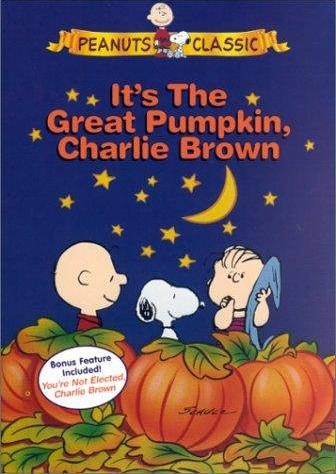
Although this film is only 25 minutes long, it really says a lot about society and the terrors that children experience when they try to fill the void left by psychological trauma due to absent parents. Well, that’s one theory. The other theory is that out of chaos, people create religion to better understand the world around them, despite logic and reason telling them otherwise.
The film begins with children of a small American town getting ready for Halloween. First, the character of Lucy murders a pumpkin and carves a childlike view of a face into the empty corpse. Her brother is mortified, but not damaged (yet) enough to go outside and destroy a pile of leaves that the character of Charlie Brown has spent hours toiling over. Lucy enters the scene again, promising an innocent game of “kick the football.” Charlie Brown has trust issues due to Lucy hurting him before. He finally agrees on Lucy’s empty promises and just as expected, the proverbial and literal football is torn out from under him. Lucy claims legal protection and is free to go about and inflict pain again.
The typical plan begins to unfold which includes trick-or-treating and a subsequent Halloween party to follow. Even the character of Charlie Brown is excited for such a plan to unfold, without any pessimistic outlook. However, Lucy’s brother and Charlie Brown’s best friend, Linus, has other plans.
Linus begins to unveil his delusion of “The Great Pumpkin.” With a basis in Christian all-giving and all-forgiving entities, coupled with Wiccan and Animism ideals, the idea of “The Great Pumpkin” emerges. Linus believes by writing a letter in his own handwriting (not sure if own blood is involved) and then putting the letter into the universe, it will conjure a giant pumpkin to animate and bestow upon Linus and all other believers an abundance of gifts.
While many do not believe Linus and many even mock him, there is one weakling who agrees to follow Linus on his mission to prove all wrong: Sally. However, Sally’s motivation may have been rooted in lust, as she fervently agrees that Linus is her soul mate. She follows Linus to a rural pumpkin patch to await the arrival of “The Great Pumpkin.”
While this is going on, the other children in town participate in the “secular” aspects of Halloween: costumes, trick-or-treating, parties, even taunting others (Linus). One lone character, Snoopy, however does not participate and instead reenacts his WW I dogfight with the elusive “Red Baron” and ending up behind enemy lines. He crawls his way back to civilization, eventually reliving the tragic moments through a series of musical pieces by Schroeder. Snoopy’s tragedy has lead him down a path of atheism, therefore rejecting any sort of religion or religious-based traditions of the holiday.
The Halloween party disbands and everyone heads home. Including Sally, who has grown impatient and rejects the idea of “The Great Pumpkin,” leaving Linus in the pumpkin patch alone. He stays out all night, never witnessing the miracle. At 4am, his sister, Lucy, finally becomes compassionate and brings Linus home, tucking him into bed. She will never fall into his delusions, but will still make sure he never does anything to harm himself.
The next morning is full of disappointment in the air. Charlie Brown’s first trick-or-treating experience was met with rejection and lack of any sufficient “treats.” Linus is dejected that his “messiah” never came. However, he reinforces his belief and says he will try again next year. The only positive outcome is that Linus will never participate in the candy-grabbing such as other children, therefore sparing him a lifetime of obesity, tooth decay, and diabetes.
 Lower It Up